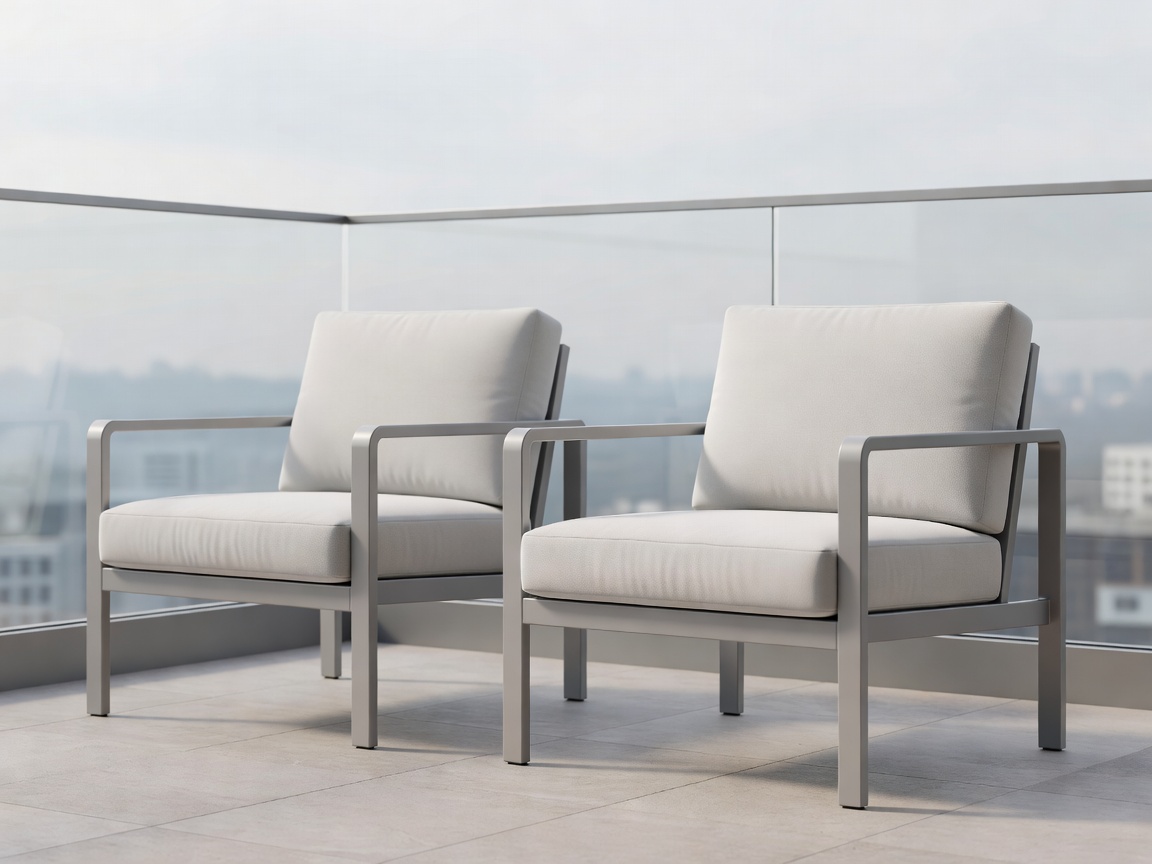
1. Material Science Breakdown
Balcony furniture lives outdoors under relentless exposure. In Central and Northern Europe, cycles of soaking rain followed by sub-zero frost destroy inferior particle composites and untreated hardwoods within two winters. Here is how key structural materials perform in real-world urban exposures:
| Material Type | Corrosion / Rot Rating | Weight Profile | Maintenance Lifecycle |
|---|---|---|---|
| Grade-A Plantation Teak | Exceptional (natural high rubber & silica oils) | Heavy (stable in strong wind) | Annual teak oil or allow natural silver patina |
| Powder-Coated Aluminium | 100% Rust-proof; impervious to salt spray | Lightweight (effortless to relocate) | Bi-annual soapy sponge wash; zero oiling |
| Olefin Rope & Polypropylene Weave | Resistant to mold, chlorine & UV degradation | Moderate | Spot clean with soft brush and neutral detergent |
| Wrought Iron / Mild Steel | Prone to rust if coating chip occurs | Very heavy (potential cantilever load risk) | Requires frequent rust-inhibitor paint touchups |
2. Cushion Engineering: Quick-Dry Reticulated Foam
Traditional indoor cushions use standard polyether foam that behaves like a sponge. When exposed to rain, water sits inside the closed cells for days, developing fungal spores, mildew odours, and deteriorating fabric seams. True outdoor balcony seating requires two distinct components:
- Reticulated Open-Cell Core: This material features a porous honeycomb matrix where 95% of internal membranes are removed during manufacturing. Water pours straight through the core within minutes rather than collecting in pools.
- Solution-Dyed Acrylic Shells: Fibres such as Sunbrella or spun Olefin are saturated with UV-stable pigments prior to yarn spinning. Unlike printed polyester which fades after 200 hours of sun exposure, solution-dyed acrylics retain rich sage, sand, and terracotta hues for upwards of 1,500 direct solar hours.
3. Dual-Purpose Storage Benches
When working within four to six square metres of total space, dedicated storage boxes waste valuable seating room. Custom or modular storage benches fulfill both needs. Look for benches built with gas-strut hinges and ventilated internal trays.
Ventilation is critical: a sealed waterproof plastic box traps humid outdoor air whenever it is opened during damp weather, creating condensation that ruins throw blankets and garden tools. Slatted wooden bottoms combined with a water-repellent internal fabric liner maintain air circulation while deflecting rain splashes.
4. Ergonomics for Micro-Balconies
In standard interior rooms, dining chairs feature a 45-centimetre seat height and 85-centimetre back angle, while lounge seating reclines back to 105 degrees with a low 38-centimetre seat height. On narrow European balconies (often just 110 to 130 cm wide), deep lounge chairs block walking paths completely.
The optimal compromise is the "conversational lounge" profile: an intermediate seat height of 42 cm with a moderately upright 95-degree backrest. This allows comfortable casual dining with a lap tray or bistro table while remaining supportive enough for three hours of reading with a footrest.
5. Winter Storage Protocols
While premium materials withstand sub-zero conditions, storing your furniture properly between November and March extends its working life by years. Never seal wooden outdoor furniture in airtight non-breathable plastic sheets; condensation will cause wood rot under the trapped wrap. Use breathable ripstop polyester furniture covers equipped with buckle straps and cinch cords to withstand winter gales.